
August 10, 2026
The Global Water Crisis: Why This Is the Turning Point for Industrial Water Stewardship

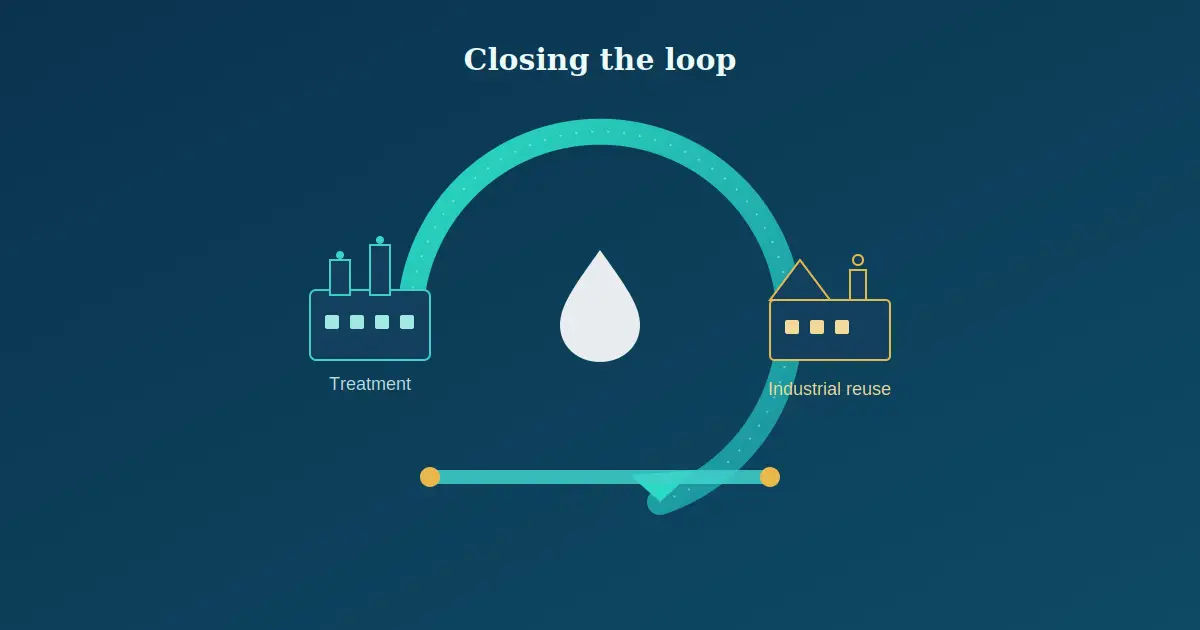
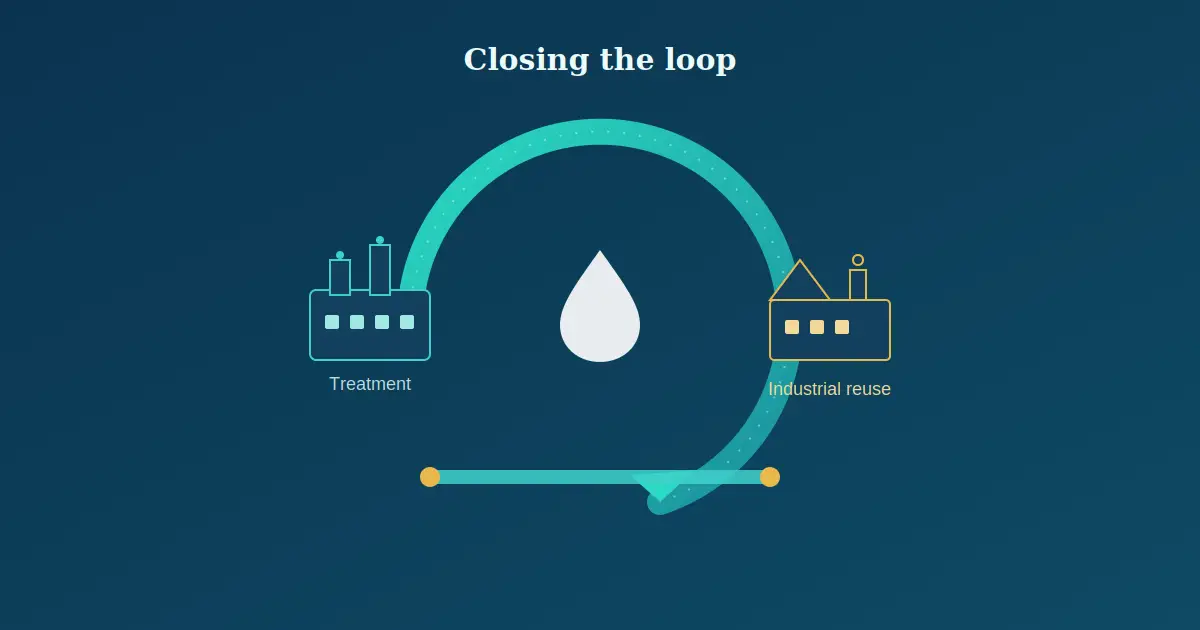
For most of industrial history, water has moved in a straight line: take it, use it, dump it. Nobody designed the system to be wasteful on purpose. It just made sense when water felt infinite. It doesn't anymore, and that straight line is finally starting to bend into a loop.
The numbers make the case better than any sustainability pitch could. The global water recycle and reuse market was worth an estimated USD 20.59 billion in 2026, and it's growing fast, projected to hit roughly USD 35 billion by 2031, a compound annual growth rate of 11.22%, according to Mordor Intelligence. That kind of growth doesn't happen because companies suddenly feel generous. It's being pulled forward by tighter discharge regulations, corporate circular-water pledges that now have real budgets attached, and a surge in demand for ultra-pure recycled water from sectors like semiconductors and green hydrogen, where the water purity bar is brutally high.
Municipal wastewater accounted for just over half of the water entering the global water recycle and reuse market in 2025. But industrial effluent reuse is the part of the market growing fastest, expanding at over 12% a year as manufacturers chase "zero liquid discharge" — systems designed to recover and reuse water while eliminating liquid wastewater discharge, while managing concentrated residuals separately.
The reason the opportunity is so large is honestly a little uncomfortable: more than 80% of the wastewater generated globally is still released into the environment without treatment, according to the United Nations. Every liter of that is simultaneously an environmental liability and a wasted resource: water that could otherwise be recovered and put back to work.
It's not one technology. It shows up at a few different scales.
Municipal-to-industrial reuse is probably the most elegant version: treated sewage water gets piped straight to an industrial user instead of drawing from a shared freshwater source. The municipality gets a use for its treated effluent instead of a disposal headache, and the industrial user gets a dependable water supply that doesn't compete with the town's drinking water.
Closed-loop industrial systems work at the plant level, treating and recirculating process water internally, usually through membrane filtration or biological treatment, instead of pulling fresh water for every cycle.
And decentralized or greywater reuse is showing up more at building or campus scale, cutting the need for big centralized treatment plants and long conveyance networks.
Membrane filtration still leads on treatment technology globally, though biological treatment, especially membrane bioreactor retrofits in older municipal plants, is the fastest-growing approach, mainly because it can reduce the footprint and energy requirements of aging municipal treatment systems.
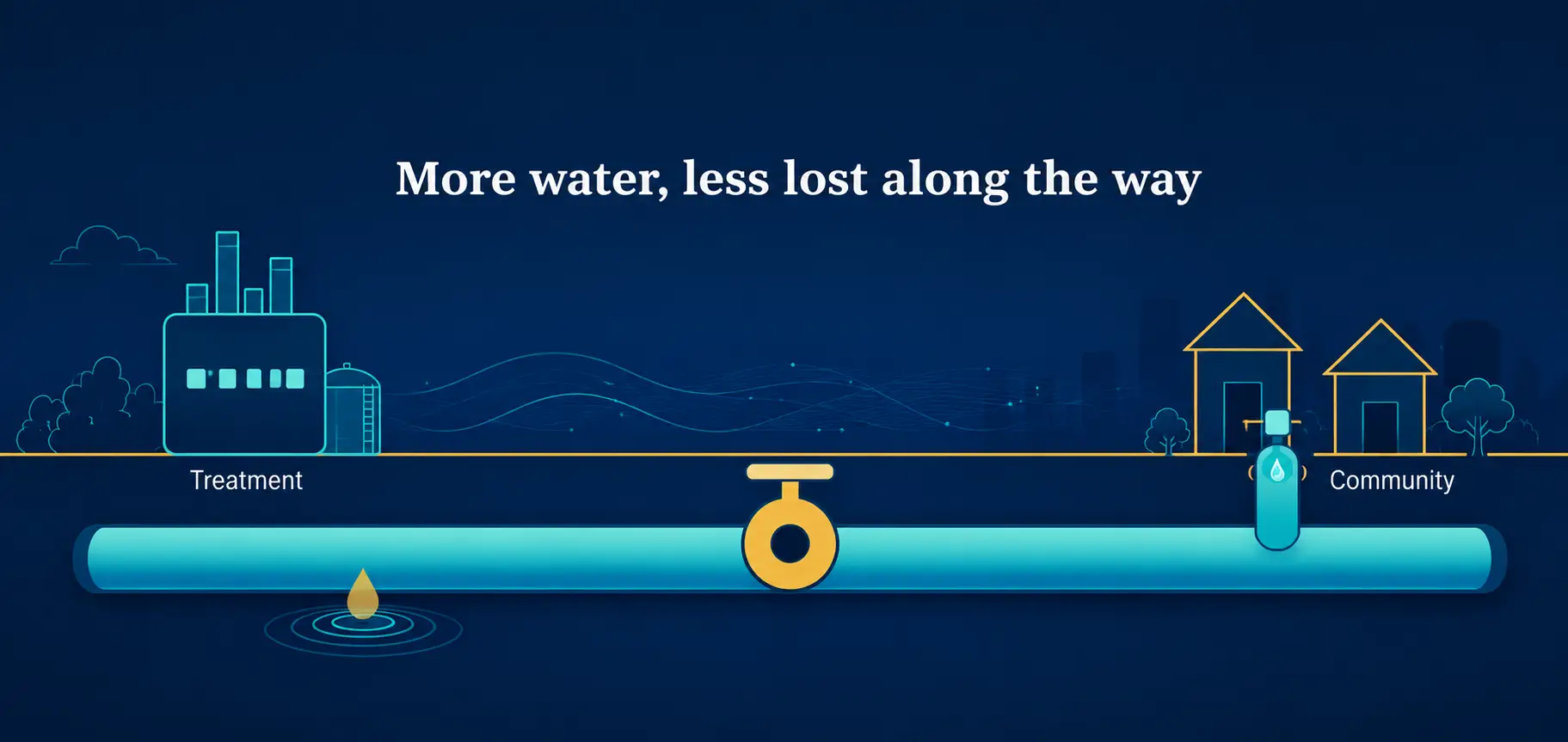
Reuse only works if the water can actually get from the treatment plant to wherever it's needed, reliably and without picking up contamination along the way. That makes the pipeline carrying recycled water just as important to this story as the treatment technology itself. A brilliant membrane bioreactor doesn't count for much if the network delivering its output leaks half of it before arriving.
The circular water economy has stopped being a niche sustainability talking point. It's a market worth over $20 billion and growing fast, driven by plain necessity, not idealism. Companies that build reuse into their operations today aren't just managing risk. They're getting ahead of where water economics are inevitably headed.
The Global Water Crisis: Why This Is the Turning Point for Industrial Water Stewardship
Where Does the Water Go? Why Better Pipes and Valves Mean More Water Reaches Families

The Sustainability Case for Durability: Why the Longest-Lasting Material Is Often the Greenest
.webp)
Beyond Connections: What Jal Jeevan Mission 2.0 Means for India’s Water Infrastructure