August 10, 2026
The Global Water Crisis: Why This Is the Turning Point for Industrial Water Stewardship

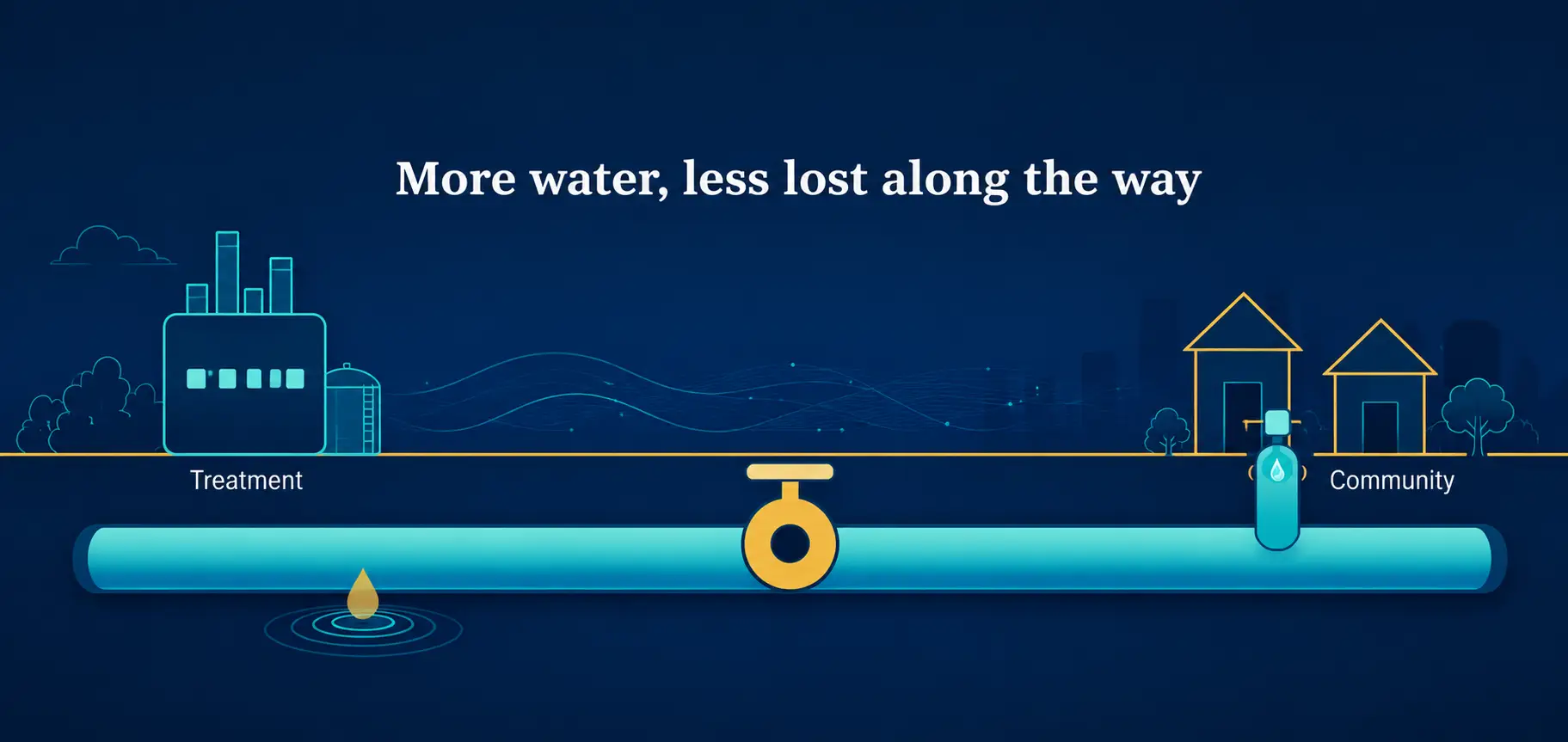
Here's a fact that often gets overlooked in conversations about the global water crisis: the challenge is not only about finding and treating more water. It is also about making sure that the water already produced actually reaches the people it is meant to serve.
The industry has a name for this: non-revenue water (NRW). It refers to water that enters a water supply system but does not generate revenue for the utility. NRW can include physical losses such as leaks and overflows, as well as apparent losses caused by metering inaccuracies, data-handling errors or unauthorised consumption, along with authorised water use that is not billed.
The scale is significant. An International Water Association study estimated global NRW at around 346 million cubic metres per day, or approximately 126 billion cubic metres a year. Using a conservative value of USD 0.31 per cubic metre, the study estimated the cost/value of this water at around USD 39 billion annually. The authors also note that these figures are estimates and that better data would help refine them.
That makes reducing water losses an important part of improving the efficiency and sustainability of water supply systems. When physical losses are reduced, utilities can make better use of water that has already been treated and pumped, potentially reducing the need for additional production and associated energy and treatment costs.
Reducing NRW requires more than replacing pipes. It involves a combination of sound infrastructure, pressure management, monitoring, metering, leak detection, maintenance and effective network management.
The pipe remains an important part of that equation. Pipe material, joint design, installation quality, operating conditions and maintenance all influence the long-term performance of a water network.
Ductile Iron pipes are widely used for critical water infrastructure because of their strength, durability and ability to withstand demanding operating conditions. Properly designed, installed and protected ductile iron pipelines can have a service life of 100 years or more, while their resistance to external loads and pressure-related stresses makes them suitable for major transmission and distribution applications.
But the pipe is only one part of the system. Joints matter too. Well-designed and properly installed joints help maintain system integrity and reduce the potential for leakage over the life of the network.
Valves are equally important, even though they often receive less attention. Properly located isolation valves allow utilities to divide networks into manageable sections, making it possible to isolate smaller portions of a system when maintenance or repairs are required rather than interrupting supply across a much larger area.
Control valves can also help utilities manage pressure within a network. Since excessive or poorly controlled pressure can contribute to leakage and infrastructure stress, appropriate pressure management is an important part of water-loss control.
Check valves serve another important function by helping prevent reverse flow when pumping conditions change. Together, these different valve applications support safer, more controlled and more manageable water distribution networks.
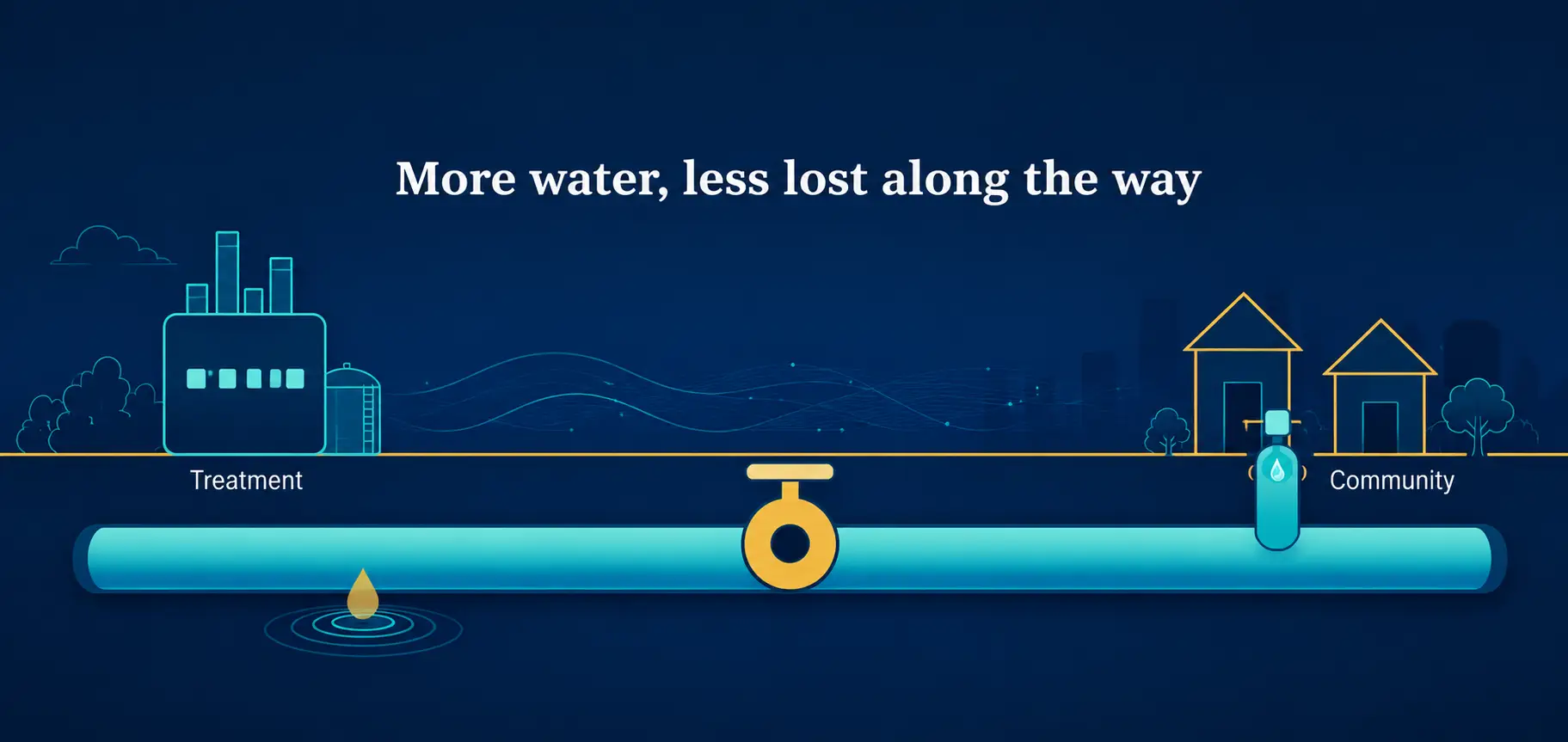
Water conservation campaigns rightly focus on using water more efficiently. But conservation does not stop at the household or industrial user. The infrastructure carrying water is part of the sustainability equation too.
Reducing physical water losses means making better use of water that has already been treated and transported. It can also help utilities reduce the energy and chemicals associated with producing water that is subsequently lost through leakage.
This is why investment in reliable pipes, effective jointing systems, appropriate valves, pressure management and systematic water-loss control deserves a place in the wider water sustainability conversation.
For companies involved in water infrastructure, the objective is ultimately straightforward: help build networks in which more of the water produced reaches the communities it is intended to serve.
The Global Water Crisis: Why This Is the Turning Point for Industrial Water Stewardship
The Circular Water Economy: How Treated Wastewater Is Becoming the World's Next Water Source
The Sustainability Case for Durability: Why the Longest-Lasting Material Is Often the Greenest
.webp)
Beyond Connections: What Jal Jeevan Mission 2.0 Means for India’s Water Infrastructure